Think about the last application your team built. Chances are your developers wrote only a small part of it. The rest came from open source packages, and those packages pulled in even more packages of their own. This saves a lot of time, but it also means every package is a possible way into your cloud environment.
Why this matters
When a flaw like Log4Shell appears, nobody asks who wrote the vulnerable code. The real question is whether you can find every place it is running and fix it fast. Attackers know this. They publish fake packages with names that look almost identical to popular ones, take over the accounts of trusted maintainers, and even hide backdoors inside respected projects, as happened with xz Utils in 2024.
Six practical steps
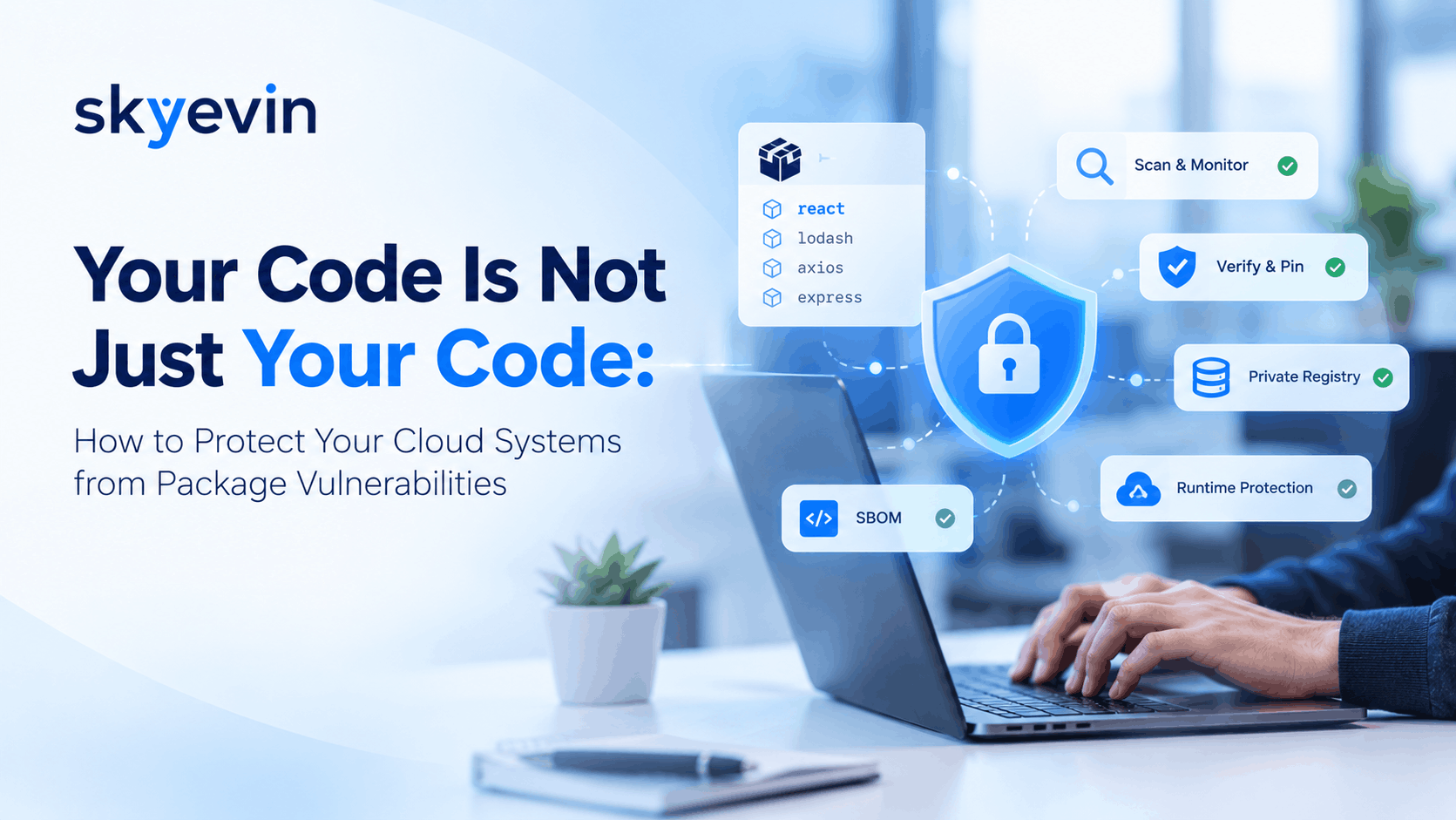
Know what you are running. Create a Software Bill of Materials (SBOM) for every application. You cannot patch what you cannot see, and an SBOM helps you answer “are we affected?” in minutes instead of days.
Scan all the time. Add automated vulnerability scanning to your build pipeline so risky packages get flagged before they reach production. Scan your container images as well, because base images carry their own dependencies.
Pin and verify. Use lockfiles and exact version numbers so a surprise update cannot sneak into a build. Where possible, check package signatures or checksums.
Control where packages come from. Download through a private registry or mirror, and set it up so public packages can never replace your internal ones. This stops dependency confusion attacks.
Limit the damage. Assume that one day a bad package will get through. Give workloads only the permissions they need, separate your networks, and keep long lasting credentials out of your build pipelines. A compromised library should never be able to reach your production database.
Set patching deadlines and stick to them. Agree on how quickly each level of severity must be fixed, for example critical issues within days and minor ones within weeks. Give every fix a clear owner so nothing gets stuck between teams.
Do not forget runtime
Scanning finds known problems, but it does not find everything. Runtime monitoring can catch strange behavior, such as a web service suddenly connecting to an address nobody recognizes. Combine it with logging and alerts so your team can react quickly.
Build the right habits
Tools help, but habits matter more. Encourage developers to question every new dependency. Is it actively maintained? Do we really need it? Could we use something we already trust? A five minute review costs very little compared with a breach.
The bottom line
You cannot remove third party risk completely, but you can manage it. With good visibility, automation, tight access controls, and a clear patching process, your team can enjoy the speed of open source without taking on its dangers.
Want to check your own exposure? Talk to our team about a dependency and cloud security review.